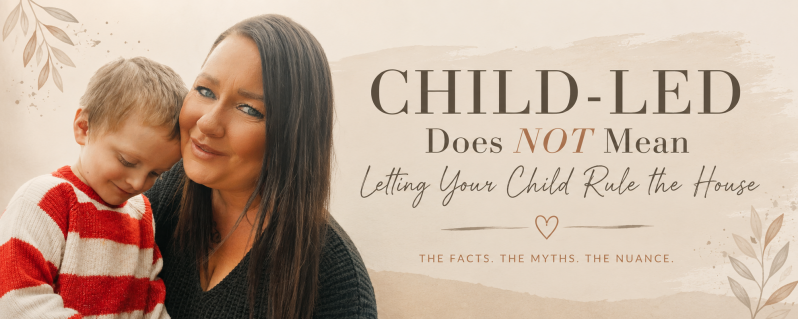
I remember sitting in soft play once, completely exhausted, trying to calmly talk Tommy through leaving without everything escalating. He wanted to stay. The transition had come too quickly, the environment was loud, he was dysregulated, and I could feel the eyes around us starting to drift over. You know the look. The one where people think they’re being subtle, but you can practically hear the thoughts anyway.
“He just needs firmer boundaries.”
“She’s letting him get away with it.”
“He needs to learn.”
At one point, somebody even muttered something about children “running the show these days,” and I remember feeling that familiar mix of shame, defensiveness, and frustration sitting heavily in my chest. I’ve been a parent for 25 years. It was a different time then and I’ve had to relearn how to parent. What people could see was a child not wanting to leave a soft play.
What they couldn’t see was the hour beforehand. The sensory overwhelm. The processing delays. The way transitions can physically feel painful for some neurodivergent children. The amount of energy he had already spent trying to cope with the world before we had even reached that moment. As much as he loves sot play, it isn’t easy for his senses.
And I think that is the problem with the conversation around being child led. Most people are judging a snapshot without understanding the whole picture.
Somewhere along the line, “child led” became confused with permissive parenting. People hear the phrase and imagine children with no routines, no boundaries, no structure, eating sweets for breakfast while parents nervously whisper affirmations in the background. Social media has made it worse because everything online gets flattened into extremes. Either you are strict and discipline focused, or you are “gentle” and apparently allow chaos to reign free.
But real parenting, especially neurodivergent parenting, rarely lives in those extremes.
For me, being child led was never about letting Tommy control every situation. It was about realising that traditional parenting advice often assumed children were capable of things they genuinely were not capable of in that moment. It was understanding that communication difficulties do not disappear just because adults decide they should. That sensory overload is not a tantrum. That regulation matters. That behaviour does not happen in a vacuum.
I think before becoming a parent, many of us unconsciously believe children behave well when parenting is good and behave badly when parenting is bad. The older I get, the more I realise how dangerously simplistic that idea is.
Because sometimes a child screaming in Tesco is not the result of poor boundaries. Sometimes it is fluorescent lighting, hunger, overwhelm, noise, transitions, unpredictability, anxiety, communication breakdown, and a nervous system reaching capacity all at once.
Sometimes refusing food is not defiance. Sometimes it is genuine sensory distress.
Sometimes “ignoring” an instruction is not rudeness. Sometimes the child is still processing the first half of the sentence while you are already repeating it louder.
And once you start seeing that, you cannot unsee it.
That does not mean boundaries disappear. Tommy still hears no. There are still routines, expectations, safety rules and limits. I am still the adult. But the way I approach those moments changed massively when I stopped seeing behaviour as something that needed to be controlled and started seeing it as something that needed to be understood first.
There is a huge difference between holding a boundary with support and holding a boundary through fear or shame.
I can say, “I know you’re upset, but we are leaving now,” while still helping him regulate through the transition. I can acknowledge that something feels hard without removing every expectation entirely. That is the nuance people often miss. They assume that if you validate feelings, you are removing boundaries. In reality, children can experience empathy and limits at the same time.
I actually think many parents become more child led after traditional approaches fail them. Especially parents of neurodivergent children. You start off trying the reward charts, the consequences, the firm voices, the “just ignore it” advice and eventually you realise your child is not becoming more regulated, they are becoming more distressed.
And slowly, you begin adjusting.
You give more processing time.
You stop demanding eye contact.
You make transitions predictable.
You notice sensory patterns.
You realise that forcing speech does not create communication.
You understand that connection works better than confrontation most of the time.
Not because you are trying to “spoil” your child, but because you are trying to actually support them.
I think one of the saddest things about modern parenting discourse is how often accommodation is framed as weakness. If a child needs visual supports, movement breaks, headphones, AAC, safe foods, slower transitions, or reduced demands, people immediately worry we are making life “too easy” for them. But nobody says a wheelchair ramp prevents resilience. Nobody says glasses stop children learning to see independently.
Yet when support involves behaviour, communication, or regulation, people suddenly become deeply uncomfortable with the idea that children might genuinely need help.
And honestly, I think part of that discomfort comes from how much society values compliance.
A quiet child is praised.
An obedient child is praised.
A child who does not inconvenience adults is praised.
But compliance and wellbeing are not always the same thing.
Some children are coping.
Some children are masking.
Some children are surviving environments that exhaust them every single day.
And many parents only realise this when they see the collapse that happens afterwards at home.
Being child led, for me, means being willing to ask harder questions beyond “How do I stop this behaviour?” It means asking what is underneath it. What the child’s nervous system is communicating. What support is missing. What skill needs developing. What demand is too high. What environment is too overwhelming.
It is not about removing all discomfort from childhood. Children still need guidance, frustration tolerance, boundaries, resilience, and support to grow. But resilience is not built through chronic overwhelm. It is built through safety, connection, co-regulation, and manageable challenges with support nearby.
I think that is the part people miss most.
Supporting a child is not the opposite of preparing them for the real world.
For many children, support is the very thing that allows them to access the world at all.
Add comment
Comments